
Five materials we specify differently in Hyderabad than in Delhi.
A house is a conversation with its city. The materials that work in Delhi's dry winters will fail in Hyderabad's humid summers — and vice versa.
We are a Hyderabad practice. All sixty-three of our completed projects are within a 40 km radius of Madhapur. This is not by design — it is a consequence of the studio's scale. But over eleven years of working only in Hyderabad, we have become specific about how this city's climate shapes the material choices we make.
We would build a very different home in Delhi. Here are five reasons why.
One — Wood
In Delhi: Solid wood expands and contracts significantly across seasons. Winter is dry (30–40% humidity). Summer is dry-to-medium (50–60% humidity). Well-seasoned teak is stable enough for most applications, but joinery must be designed with expansion gaps. Veneers, if used, must be applied over marine-grade plywood.
In Hyderabad: Humidity swings from 30% in February to 85% in July–August. This is a punishing range for wood. Solid wood tends to warp within 2–3 years unless it is exceptionally well-seasoned (24+ months at ambient) and installed with generous expansion gaps. We specify plywood-cored construction (BWR grade minimum, BWP for kitchens and bathrooms) for almost all joinery. Solid wood is reserved for statement pieces and small elements that can be replaced.
The wood species itself changes too. In Delhi, we would use more solid teak. In Hyderabad, we use more rosewood veneers over BWR ply — rosewood handles humidity better than teak, and the veneer construction is more stable than the solid.
Two — Paint
In Delhi: Standard emulsion paint (Asian Paints Royale, Dulux Velvet Touch) holds up well. Humidity is low, walls stay dry, and the finish lasts 6–8 years without visible degradation.
In Hyderabad: We specify anti-fungal, anti-microbial paint (Asian Paints Royale Aspira, Dulux Weathershield for exterior). Ordinary emulsion in Hyderabad develops black mildew spots on external walls within 3 years, especially on north and east-facing walls that receive less direct sun. The anti-fungal premium is about 25% more expensive at initial paint stage but eliminates a repaint in year 4–5.
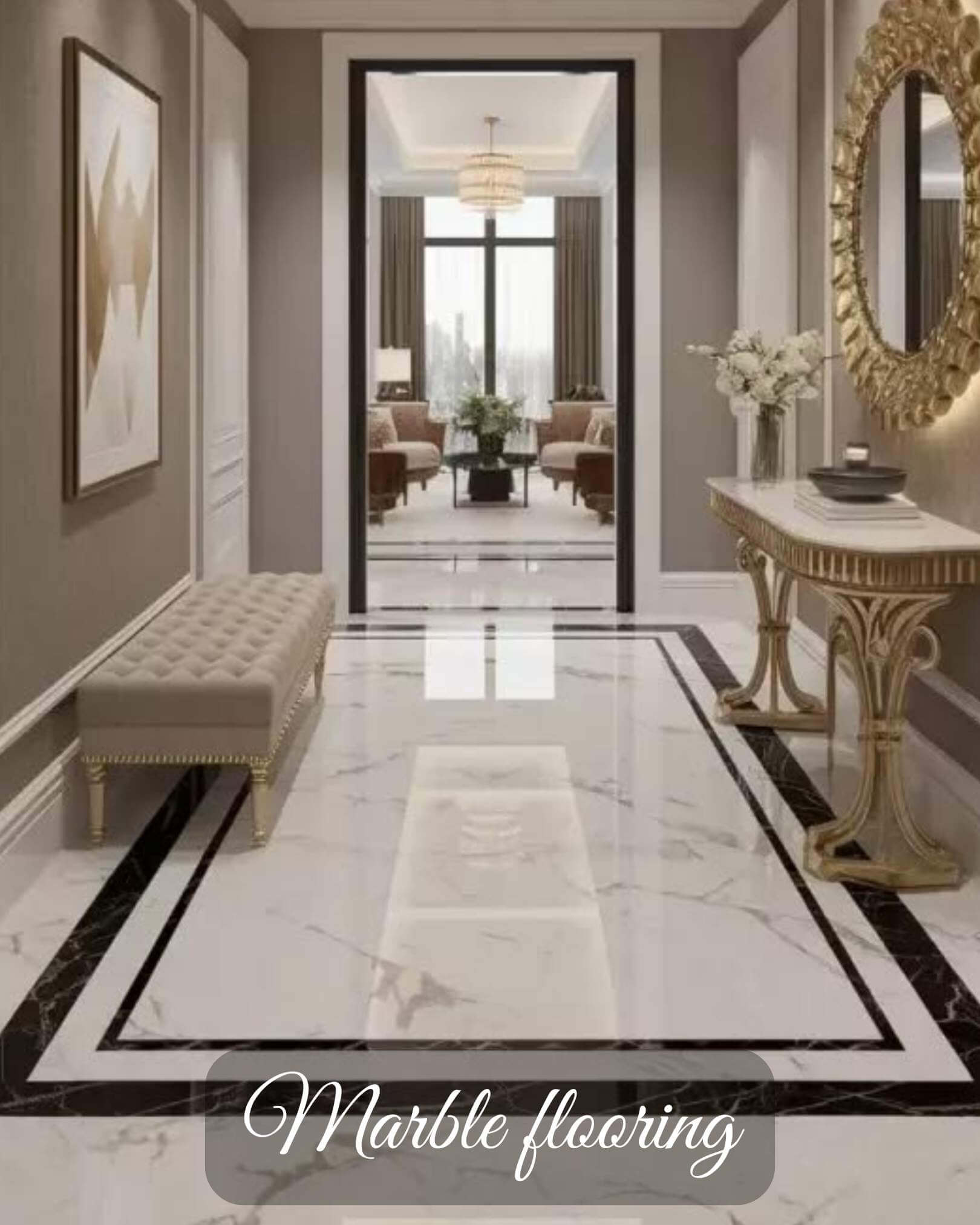
Three — Stone flooring
In Delhi: Marble is comfortable underfoot for most of the year. Winters can be too cold — we would recommend underfloor heating in bedrooms and bathrooms.
In Hyderabad: The floor is a cooling agent. Marble, granite, and Kota stone all read as pleasant underfoot for most of the year. Underfloor heating is unnecessary and would be a mistake — the 2–3 weeks a year when the floor feels slightly cool are welcomed, not corrected.
We also specify differently for the finish. In Delhi, we would use a leather-finish (matte) marble for slip resistance in winter. In Hyderabad, we use polished marble more often — it is easier to keep clean in humidity, and the slip risk is lower because we are not walking indoors with wet feet from snow or rain.
Four — Fabric
In Delhi: Heavier upholstery works. Wool blends, velvets, and linen can be used year-round with only a seasonal swap for the summer months (May–August). Dust is a factor — we recommend darker, patterned fabrics over pale solids.
In Hyderabad: Heavy fabrics develop musty smells during the monsoon months. We specify cotton-linen blends, treated for mildew resistance, in most upholstery applications. Velvet is reserved for occasional-use rooms (formal living) rather than daily-use rooms (family living). Curtains are lined with a moisture-wicking backing that most Delhi projects would not need.
The colour palette shifts too. In Delhi, we can use warmer earth tones — the drier air reads them as warm. In Hyderabad, we lean cooler — pale greys, muted greens, soft off-whites — which read as calming rather than cold in the humid air.
Five — Metal hardware
In Delhi: Brass, iron, and steel all age gracefully. Unlacquered brass develops a beautiful patina. Steel remains crisp.
In Hyderabad: Iron corrodes visibly within 2 years unless protected. Unlacquered brass develops patina faster and more unevenly than in Delhi — it tends to darken in humid patches rather than developing a uniform sheen. Steel remains stable but requires more frequent cleaning to prevent water spots on visible surfaces.
We specify:
- PVD-coated stainless steel (rather than plain SS) for all bathroom hardware
- Solid brass with a thin satin lacquer (rather than unlacquered) for door hardware — the lacquer slows the humidity-driven darkening without preventing the natural aging entirely
- Aluminium rather than iron for window frames and railings — aluminium is stable, iron is not
The city is the first material of any home. Every subsequent material decision is shaped by the climate, the light, the dust, and the humidity of the specific place.
The larger point
Studios that ignore the city — that specify the same materials in every location — produce homes that look identical in photographs and age badly in practice. The Delhi kitchen with the wrong plywood grade will warp in Hyderabad. The Hyderabad bedroom with the wrong paint sheen will discolour in Delhi.
We are a Hyderabad practice. This is what we know. If you are building here, ask your designer whether they have designed for this specific climate — or whether they are specifying the same way they would in Delhi, or Bengaluru, or Mumbai.
The answer will tell you a great deal.
— Mahesh